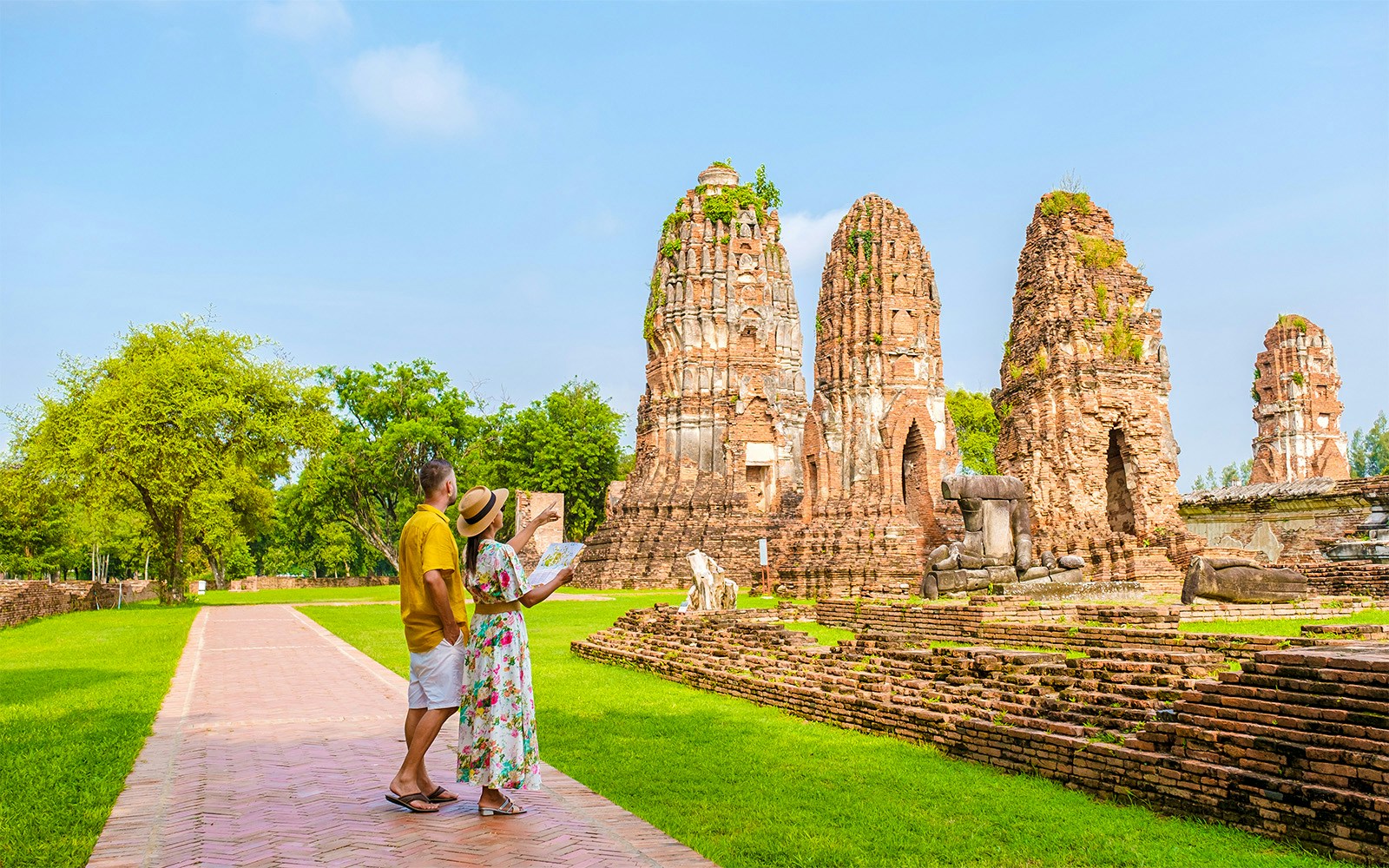
As a key stop on most Ayutthaya day tours from Bangkok, it pairs effortlessly with visits to Wat Mahathat, Wat Chaiwatthanaram, and Wat Phra Sri Sanphet—offering a complete picture of the city’s religious and royal past.
What is the Reclining Buddha?
The Reclining Buddha of Ayutthaya, located at Wat Lokayasutharam, is one of the city’s most iconic and revered landmarks. It is approximately 37 meters in length and 8 meters in height, depicting the Buddha in a serene reclining posture, symbolizing his final moments before attaining ultimate enlightenment. Crafted from brick and covered in stucco, the statue rests on a lotus base, with the Buddha’s head gently supported by his right arm atop a lotus pillow—a posture that signifies peace and spiritual liberation.
Why visit the Reclining Buddha?
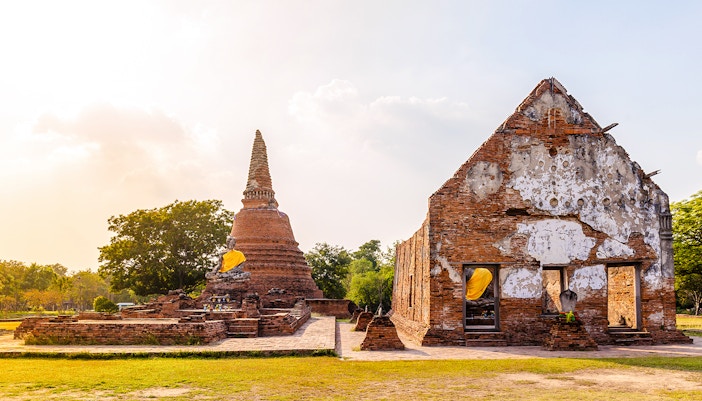
Seamlessly integrated into day tours
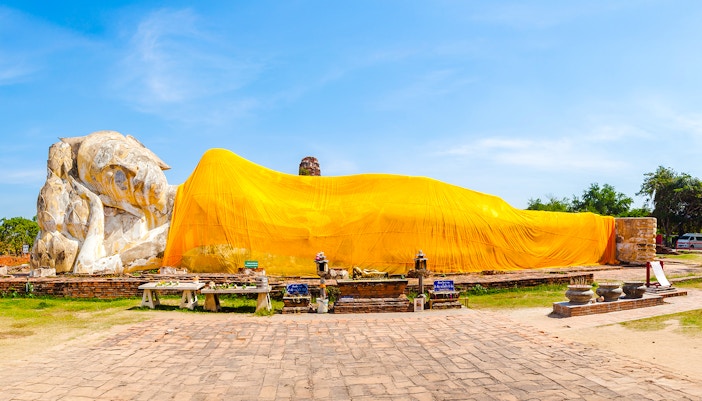
Ideal for capturing peaceful moments
With no large crowds and an expansive, unobstructed view of the statue, it’s a favourite for photography. Arrive early or late in the day to catch the golden light casting gentle shadows across the Buddha’s serene face.
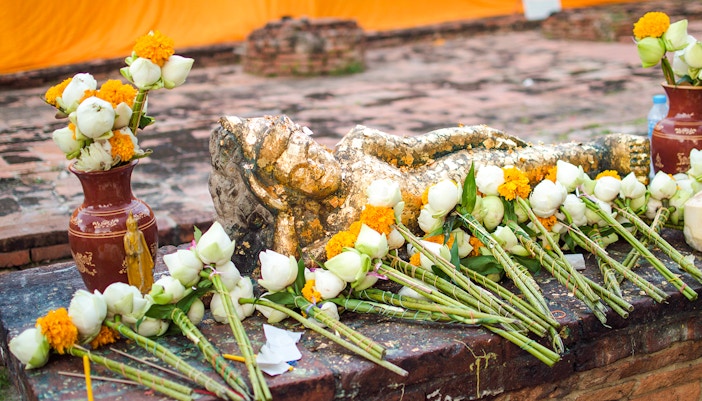
Echoes of Ayutthaya’s golden era
Believed to have been built during the early Ayutthaya period, the statue is the last standing remnant of Wat Lokayasutharam, a once-grand temple complex. Its worn yet resilient form silently narrates centuries of history, wars, and restoration
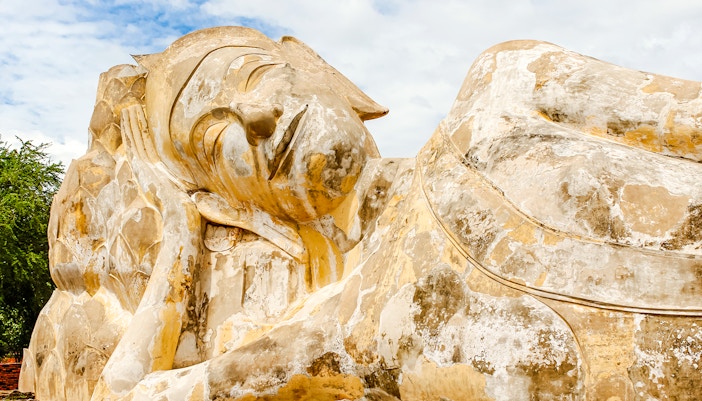
Symbol of spiritual liberation
The reclining posture represents the Buddha’s final moments before entering parinirvana, the state of ultimate enlightenment. The serene expression on the Buddha’s face conveys a profound sense of calm and release from worldly suffering.
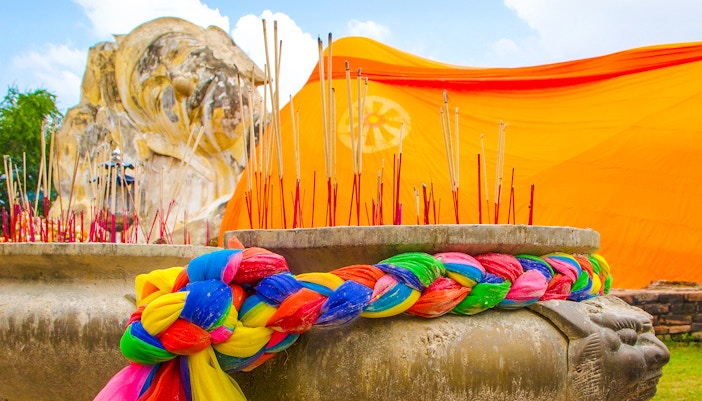
Living heritage site
Far from being just a historical relic, the statue remains a sacred place of worship. Devotees lay garlands, burn incense, and drape vibrant saffron robes over the statue as acts of reverence, especially during Thai festivals like Songkran.
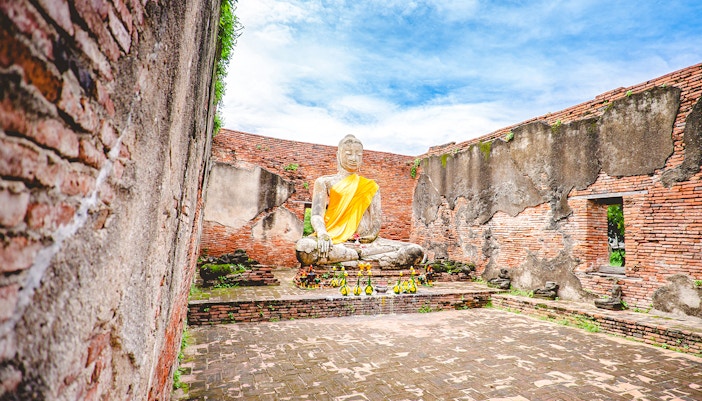
Atmospheric setting amid ruins
The statue is surrounded by the grassy remains of ancient walls and scattered bricks, creating an open-air museum feel. The blend of open skies, quiet ambience, and historical ruins makes for a deeply contemplative experience.
Frequently asked questions about the Wat Lokayasutharam
The Reclining Buddha is a large outdoor statue located at Wat Lokayasutharam, depicting the Buddha in a serene lying posture symbolising his final moments before entering parinirvana.
The statue measures approximately 37 meters (121 feet) in length and about 8 meters (26 feet) in height.
It is situated within the grounds of Wat Lokayasutharam in the Ayutthaya Historical Park, Thailand.
The reclining posture represents the Buddha’s transition into parinirvana—his final liberation from the cycle of rebirth.
No, the temple structures of Wat Lokayasutharam are mostly in ruins, and the Reclining Buddha is the only major remaining feature.
Yes, locals and visitors continue to pay respect by offering incense, flowers, and draping the statue with saffron robes.
No, there is no official entrance fee, but donations are welcome.
Early morning or late afternoon is ideal for avoiding the heat and capturing the best lighting for photos.
Yes, photography is allowed, and the open-air setting offers excellent angles for memorable pictures.
You can reach Ayutthaya by train, bus, or private car from Bangkok. The Reclining Buddha is accessible by tuk-tuk or bike within the historical park.
Yes, most guided tours from Bangkok to Ayutthaya include a stop at Wat Lokayasutharam along with other major temples.
Yes, during festivals like Songkran, the statue becomes a focal point for merit-making and local ceremonies.
The statue is original but has undergone several restorations, including major efforts in 1954 and again in the late 1980s.
No, touching or climbing the statue is considered disrespectful and is strictly prohibited.
Dress modestly, covering shoulders and knees, as it is a religious site and an active place of worship.